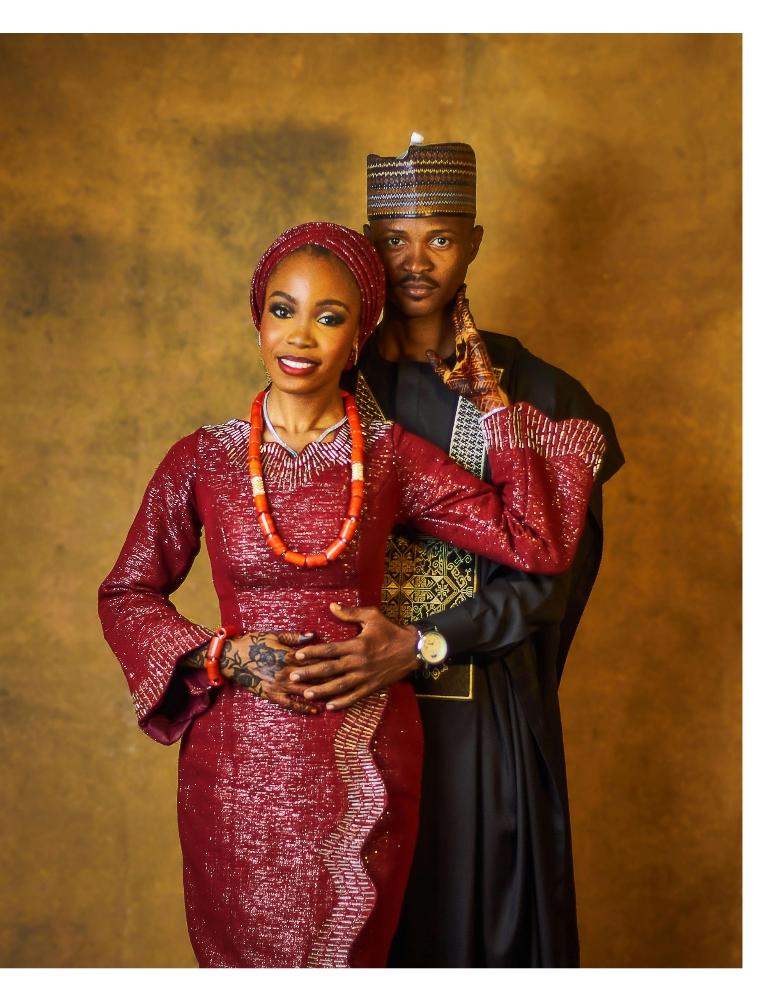
Customary Marriages in South Africa: More Than a Cultural Union – Understanding Their Legal Consequences, Dissolution and Impact on Succession
Customary marriages are not only an expression of tradition and family values, but also a legally recognised institution that carries significant rights and obligations. Yet despite constitutional protection and extensive legislative regulation, customary marriages remain one of the most misunderstood areas of South African family law.
In practice, disputes involving customary marriages rarely begin on the day the marriage is concluded, but they emerge years later and sometimes decades later when a relationship has broken down or when a spouse wishes to remarry or quite commonly when one of the parties passes away and family members are left to untangle the legal consequences of decisions made many years before.
Constitutional Recognition and the Development of Customary Marriage Law
The constitutional era fundamentally changed the legal status of customary marriages in South Africa. Section 211 of the Constitution recognises customary law as an integral part of South Africa’s legal system and requires courts to apply customary law where it is applicable, subject to the Constitution itself and any legislation dealing specifically with customary law.
Importantly the Act also confirmed what many people still fail to appreciate today: a customary marriage is not merely a cultural event. Once validly concluded, it creates a legally enforceable relationship with real legal consequences.
What Makes a Customary Marriage Valid?
The validity of a customary marriage is governed by section 3 of the Recognition of Customary Marriages Act 120 of 1998. In broad terms three requirements must be met –
1. The parties must both be above the age of eighteen.
2. They must both consent to entering into the marriage.
3. Finally, the marriage must be negotiated and entered into, or celebrated, in accordance with customary law.
Courts have repeatedly recognised that customary law is not frozen in time. What is often referred to as “living customary law” acknowledges that customs evolve, adapt and differ between communities. For this reason courts have moved away from rigid checklists and instead focus on whether the parties and their families intended to create a marital union recognised by their particular customs and traditions.
Lobola negotiations often play an important role in establishing the existence of a customary marriage, but courts have repeatedly made it clear that full payment of lobola is not necessarily a prerequisite for validity. Similarly while traditional ceremonies, family involvement and the integration of the bride into the groom’s family remain important indicators, each matter must be assessed on its own facts.
What ultimately matters is whether the evidence demonstrates that a customary marriage came into existence according to the applicable customary practices.
Registration Does Not Create the Marriage
A misconception that continues to surface in practice is the belief that a customary marriage is invalid if it has not been registered with the Department of Home Affairs.
Registration serves as proof of the marriage, but it is not a requirement for validity. An unregistered customary marriage remains legally valid if the requirements set out in the Act have been satisfied.
This distinction becomes particularly important when disputes arise after the death of a spouse. In many instances surviving spouses find themselves having to prove the existence of a customary marriage years after it was concluded, often relying on witness testimony, lobola correspondence, photographs and evidence from family members.
The Property Consequences Many People Overlook
Perhaps one of the most important legal consequences flowing from a customary marriage relates to property ownership.
A monogamous customary marriage concluded after the commencement of the Recognition of Customary Marriages Act is automatically in community of property and of profit and loss unless the parties entered into a valid antenuptial contract before the marriage. In simple terms this means that both spouses share ownership of the joint estate. Assets acquired during the marriage generally form part of that joint estate. This is the same with the liabilities incurred during the marriage may affect both spouses.
The law recognises marriage as a partnership. Once a valid customary marriage exists the proprietary consequences attach automatically unless they have been lawfully excluded.
How Does a Customary Marriage End?
Many people believe that a customary marriage can be terminated through separation, family discussions, cultural rituals or the return of lobola. That belief is legally incorrect.
A customary marriage can only come to an end in one of two ways –
1. The first is through the death of one of the spouses.
2. The second is through a decree of divorce granted by a competent court.
That is the position established by section 8 of the Recognition of Customary Marriages Act. The marriage remains legally intact until a court dissolves it or one of the spouses dies.
This legal reality often catches people by surprise because the social reality may look very different. Parties may have lived apart for ten or twenty years. They may have formed entirely new families. They may even genuinely believe that they are no longer married. Legally however the marriage may still exist.
The Problem of Subsequent Civil Marriages
One of the most difficult consequences of failing to properly dissolve a customary marriage arises when one spouse later enters into a civil marriage. This issue has appeared before South African courts on numerous occasions.
Typically the facts are similar, a couple enters into a valid customary marriage, and years later, they separate without obtaining a divorce. One of the spouses subsequently concludes a civil marriage with another person. Everything may appear perfectly normal until a dispute arises, often after death. The spouse from the customary marriage or their family then approaches the courts seeking recognition of the existing customary marriage and challenging the validity of the subsequent civil marriage. The courts have consistently emphasised that a person cannot simply ignore an existing marriage and create a new marital status without first complying with the law.
Several judgments have involved applicants relying on valid customary marriages that had never been dissolved in order to challenge subsequent marriages entered into by their spouses. In some instances the courts have declared those later marriages invalid because the earlier customary marriage remained legally intact. These cases serve as a reminder that marital status is determined by law, not by assumption or convenience.
The Succession Consequences No One Thinks About
While divorce disputes often attract attention some of the most complicated customary marriage cases arise after death. This is where the consequences of an undissolved customary marriage become particularly significant.
A person may separate from their customary spouse and begin a new life elsewhere. They may acquire property, build a business, marry again and raise children. For years nobody questions the legal position. Then death occurs and suddenly questions arise about who the lawful surviving spouse is.
Who inherits?
Who receives pension benefits?
Who qualifies for maintenance claims against the estate?
Who owns the matrimonial property?
Where a valid customary marriage was never dissolved, the surviving customary spouse may have rights that significantly affect the administration of the estate. In some cases they may be recognised as the lawful surviving spouse despite years of separation. Where the marriage was in community of property, they may first become entitled to a share of the joint estate before any inheritance is distributed.
Assets that family members believed belonged entirely to the deceased may in fact form part of a joint estate. Benefits expected to pass to another spouse may become subject to legal challenge. Estate administration can be delayed for years while the validity of marriages is litigated.
Conclusion
Customary marriages occupy a unique position within South African law. They represent the intersection of culture, family, history and constitutional values. Yet they are far more than cultural institutions. They are legally recognised marriages capable of affecting property ownership, inheritance, succession, maintenance and marital status itself.
The lesson emerging from both legislation and case law is remarkably simple. Once a valid customary marriage comes into existence it remains legally effective until it is dissolved by divorce or terminated by death. Separation alone changes nothing.
For those who have entered into customary marriages, and for those advising them, that reality should never be overlooked. The legal consequences may not become apparent immediately. Often they emerge years later when relationships have changed, families have grown and estates must be administered. By then, what may have seemed like a private family matter can become a complex legal dispute with far-reaching consequences.
Understanding customary marriages therefore is not merely an academic exercise. It is an essential part of ensuring legal certainty, protecting rights and preserving the dignity of those whose lives continue to be shaped by customary law in modern South Africa.
– Thandeka Sandile (B.Com LL.B)